“The next video will be easy, guys,” I lied.
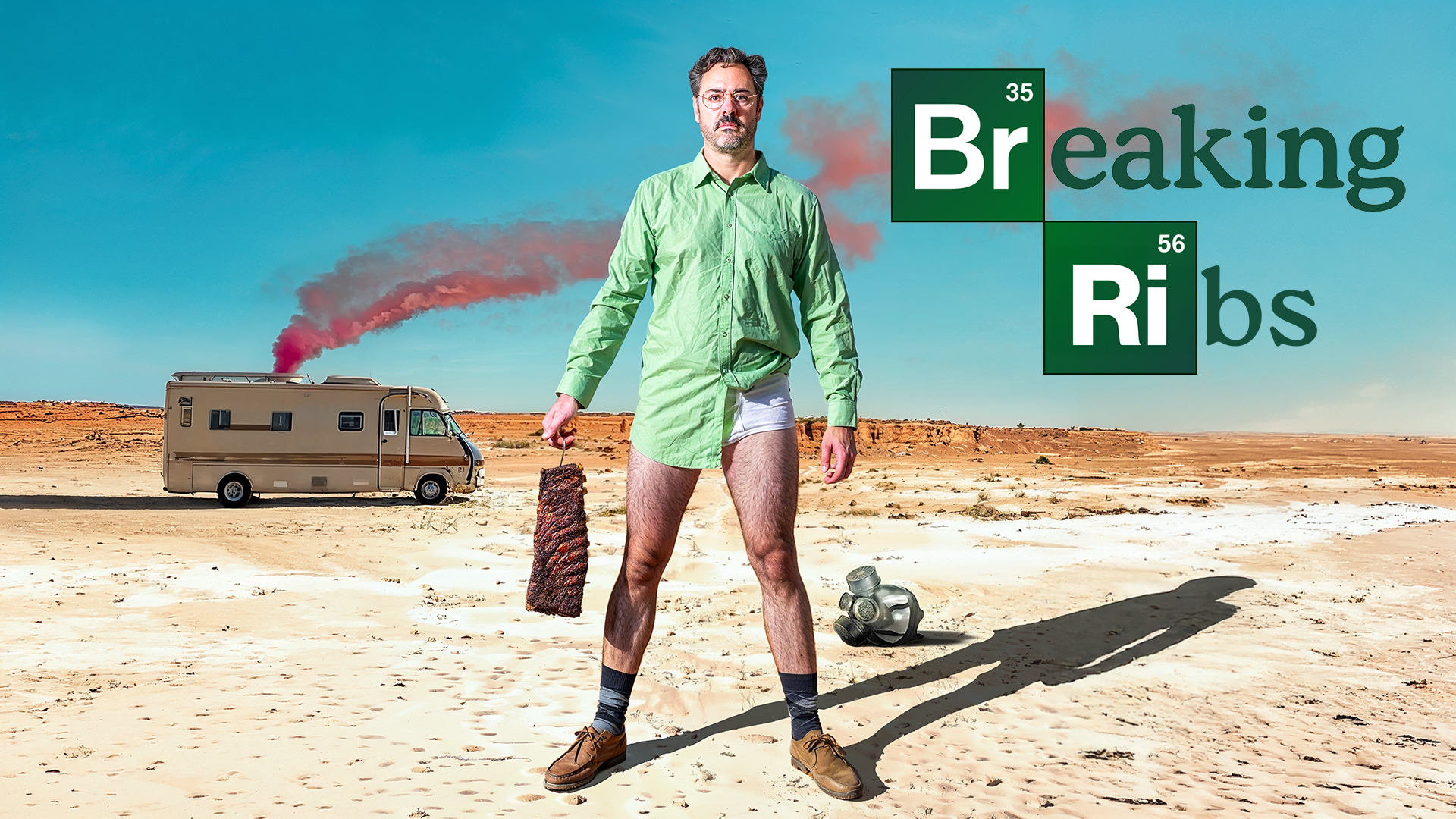
Five weeks, eight locations, two states, and me in my underwear channeling Walter White in the desert later, I realized just how spectacularly wrong I was.
Rational YouTube creators pick a recipe, cook it, film it, and call it done. My approach to cooking videos causes me to disappear into months-long spirals of obsessive recipe development that inevitably morph into something resembling a PhD thesis crossed with an indie film, all packaged as a YouTube video.
I’d just crawled out of 6 Hour Brisket hell. Months of recipe development that had me trying to beat the laws of thermodynamics into submission. Days of shooting turned into weeks as I kept tearing apart perfectly good footage in pursuit of something better. Post-production became its own circle of hell. Tsuriel built motion graphics that made a cooking video feel like speedrunning a 90s Nintendo game. Hans spent his evenings composing original chiptune music and mixing 200+ tracks of sound effects. Brian and I worked to stitch it all together into something coherent, or at least watchable. We were fried. Burned out. Done.
I needed something simple for mid-summer in Seattle. Something I could knock out in a couple of days without losing my mind or my marriage.
Ribs.
But the world doesn’t need another YouTube rib video. Thousands already exist, rehashing the same rubs, mops, and secret competition winner hacks.
I needed something worth my audience’s attention. If the 6 Hour Brisket video had been my deep dive into collagen breakdown, maybe my next one could tackle smoke chemistry and how it creates the color, aromas, and tastes that define barbecue.
Liquid smoke seemed perfect for maximum controversy. I could explain the chemistry while watching meatheads lose their minds over “bullshit” smoke. Plus it would democratize great ribs for people trapped in apartments without smokers. I already had a solid recipe we’d developed at ChefSteps for our Apartment Ribs. Simple refresh, couple of days of work, done.
That was the plan, anyway. Instead, I went tumbling back down a rabbit hole I’d been circling for more than a decade, making a better smokeless smoked rib.
The ChefSteps recipe was built around a specific rub to create smoky flavor, basically another not-so-secret formula. But what happens when someone prefers Kansas City sweet over Carolina tangy? Or Memphis dry? I wanted to build something foundational that worked for anyone’s preference.
So I stripped my recipe back to salt, pepper, pork, and smoke. There’s nowhere to hide with a Texas-style smoked rib. My goal? Liquid smoked ribs good enough to fool a couple of the most respected pit masters in Texas. The audacity was breathtaking.
Which meant I needed a breakthrough that had eluded me for years. I started with what I knew, and the first thing I wanted to tackle was getting a smoke ring. You know, that telltale pink band that forms when nitric oxide from burning wood reacts with myoglobin in the meat. My oven wasn’t going to give me nitric oxide, so I re-used a trick from my brisket video: spritzing a nitrite-containing curing salt solution onto the ribs.
The solution gets double-diluted down, and then sprayed onto the ribs. Even though you thoroughly wet the ribs, you’re applying less than 10 milligrams of actual nitrite. But it’s more than enough. The nitrite converts into nitric oxide, which then reacts with meat in the same way as if it had come from burning wood. Spray the solution on just before cooking for a shallow ring, or let it soak overnight for something deeper.
Now for the hard part, the smoke. A company called Red Arrow in Manitowoc, Wisconsin makes nearly all the smoke condensates sold by different brands. They can supply almost anything since each brand and commercial user wants a slightly different smoke profile. But walk into any supermarket and you’re stuck with the usual suspects. Hickory, mesquite, and maybe applewood if you’re lucky. I settled on Wright’s Applewood liquid smoke because it had a full-bodied, if rather generic smoke flavor that can work across a lot of styles of ribs. Hickory is light, almost sweet, while mesquite hits you over the head with its mesquite-ness. Oak would have been perfect, but good luck finding that.
Store-bought liquid smoke is also diluted compared to the hardcore commercial stuff, because brands love selling you water. I found you need about 2 tablespoons for a rack of ribs. That’s around 2 to 3% of their weight, so I sprayed it on for even coverage and cooked them in a convection oven at 275°F for about 4 hours. The ribs looked perfect. That gorgeous mahogany colored bark you see in mouth-watering Instagram posts from truly skilled pitmasters showing off their enticing ribs. Everything screamed ‘this is going to be incredible.’
Then I took a bite that tasted of disappointment and sadness. The smoke flavor was underwhelming.
The obvious move would be adding more liquid smoke. Big mistake. Overdo it and you get meat soaked in vinegar and sour compounds that’s absolutely disgusting. Even a dog would walk away.
Most people don’t understand that liquid smoke isn’t a flavor you add, it’s a cocktail of reactive compounds. It’s like the Maillard reaction, but one that works at the lower temperatures of barbecue.
Take carbonyls in smoke: these aldehydes and ketones are highly reactive with amino acids in meat proteins. These reactions form the red, yellow, and brown pigments that give barbecue its color. Natural meat sugars like ribose amplify these reactions, while rendered fats dissolve and carry fat-soluble smoke compounds deeper into the bark.
Then you’ve got the phenolics responsible for most of the unmistakable smell of pit-smoked barbecue. Guaiacol gives you that bacon-y campfire smell. Eugenol and syringol bring cloves and wood smoke. Vanillin adds vanilla sweetness. The list of aromatic molecules goes on. And then there is acetic acid, which is why this stuff was historically called wood vinegar. It lowers the pH at the meat surface, making proteins more reactive and accelerating these color and flavor reactions.
The constantly evolving chemical reactions between these molecules create a symphony of colors and flavors, and like any great performance, timing is everything. Applying liquid smoke once at the beginning dumps hours worth of reactive compounds onto meat that isn’t ready for them. Real barbecue smoke delivers those same compounds gradually, as the meat reaches each stage where it can actually use them.
What if I could mimic that steady supply instead of the overwhelming frontload? I needed to deliver each compound when the conditions were just right for it to play its part.
I tried spraying smoke every 15 minutes. Complete disaster. Constantly opening the oven turned cooking into an all-day ordeal and overdosed the ribs into something inedible.
I needed better timing. I needed to spray on the smoke when the meat was ready for it.
As meat cooks, the surface goes through distinct phases, and each phase creates different conditions for smoke reactions. In the beginning, ribs are soaking wet. Most of what liquid smoke you spray just mixes with surface water and evaporates, but some of it does react as proteins at the surface start denaturing. You want some to get the process started, but this first application alone won’t give you great ribs.
When the surface temperature gets close to 150°F, the real action begins. Proteins like myosin have unwound and are highly reactive. This is a good time for your second hit of smoke, but you’re still fighting evaporation that carries the smoke away. This is stall territory, so this isn’t your final move.
The sweet spot is 170 to 180°F. Most muscle proteins on the surface are denatured and primed for action. The surface has dried enough that these denatured proteins start concentrating and everything gets sticky. It’s nearly ideal conditions for smoke compounds to actually stick around and do their work.
At 205°F, the ribs have reached their target temperature. But we’re not done, because barbecue plays by different rules. Doneness comes down to time at temperature, not just hitting a number. My ribs needed another hour at this temperature to finish converting enough collagen to gelatin. This transforms tough meat into something so tender it gives up all resistance and practically begs to be pulled from the bone. And while this happens, the surface keeps drying and the bark deepens to rich, dark hues with that perfect snap.
A mountain of ruined ribs later, I finally settled on these four strategic applications, and the difference was dramatic. Instead of a muted smoke flavor that tasted like disappointment, I was getting something that actually tasted like barbecue. The kind that would make a pit master pause and ask questions.
I thought these ribs were good, which should have been my first warning sign. When you’re happy with your own cooking, you’re probably not being honest with yourself. Josh, my longtime product design collaborator and frequent eater of my leftover experiments, said they were great. My wife calls our relationship a bromance, and since I literally pay Josh for his work, he’s contractually obligated to tell me my food is amazing.
I needed someone who wouldn’t lie to me. Someone who really knows what they’re talking about and can articulate exactly why something isn’t good enough without worrying about hurting your feelings. Someone like my friend Jeff Knoch who runs Jeff’s Texas Style BBQ. He makes some of the best barbecue in Washington, and he agreed to taste my smokeless smoked ribs. Reluctantly.
Jeff approached my ribs with skepticism. He flexed the rack, checking the texture. The bark looked good to him. He approved of the minimal salt and pepper—his style. When he cut into them, the smoke ring actually surprised him. He took a thoughtful bite, chewed slowly, considered. The verdict: good tenderness, good flavor. Everything was checking the right boxes.
When I pressed him for a score, he said they were an 8 out of 10.
The thing about perfectionism is that it makes you incapable of recognizing success. Eight out of ten should feel like victory. Instead, it feels like failure wrapped in polite encouragement. So I asked, “Why not ten?” and he just gave me one of his ribs to try. One bite and I knew. His were just better. There was a depth to the smokiness that mine was missing.
The problem isn’t technique. It’s that commercial liquid smoke has been neutered by well-meaning regulations. The chemists at Red Arrow have incredible control over every variable of combustion: wood variety, moisture content, temperature, oxygen levels, and airflow. They can tune their wood burning to create completely different smoke profiles, then chill and capture it all. The smoke gets separated into fractions: water-soluble compounds sink to the bottom, fat-soluble molecules float on top. It’s sophisticated chemistry that can produce remarkably complex liquid smoke condensates.
But then comes the regulations that force them to weaken the very thing they’ve perfected. Once smoke becomes a food ingredient, it falls under FDA oversight. Harmful compounds naturally present in barbecue smoke must be removed for safety. We’re talking about potentially carcinogenic PAHs (polycyclic aromatic hydrocarbons) that form when you burn wood.
Removing them isn’t unreasonable, but the process isn’t very selective. A lot of the complex molecules that create smoke’s depth get thrown out along with the genuinely unhealthy ones.
Those stripped-away molecules were the difference between Jeff’s ribs and mine. Between his perfect 10 and my disappointing 8. I wanted them back.
And this is where my recipe development spiraled into madness, because I already knew exactly how to get them—even if it meant disappearing into the kind of obsessive chemistry experiment that makes your kitchen look like a meth lab.
I happen to have laboratory distillation equipment that would let me make my own raw smoke condensate at home (don’t ask), but most people don’t. So I decided to MacGyver something accessible. Chemists call it a cold finger. The idea is to trap volatile molecules by condensing them on cold surfaces. The colder you can make the glass, the more you’ll capture.
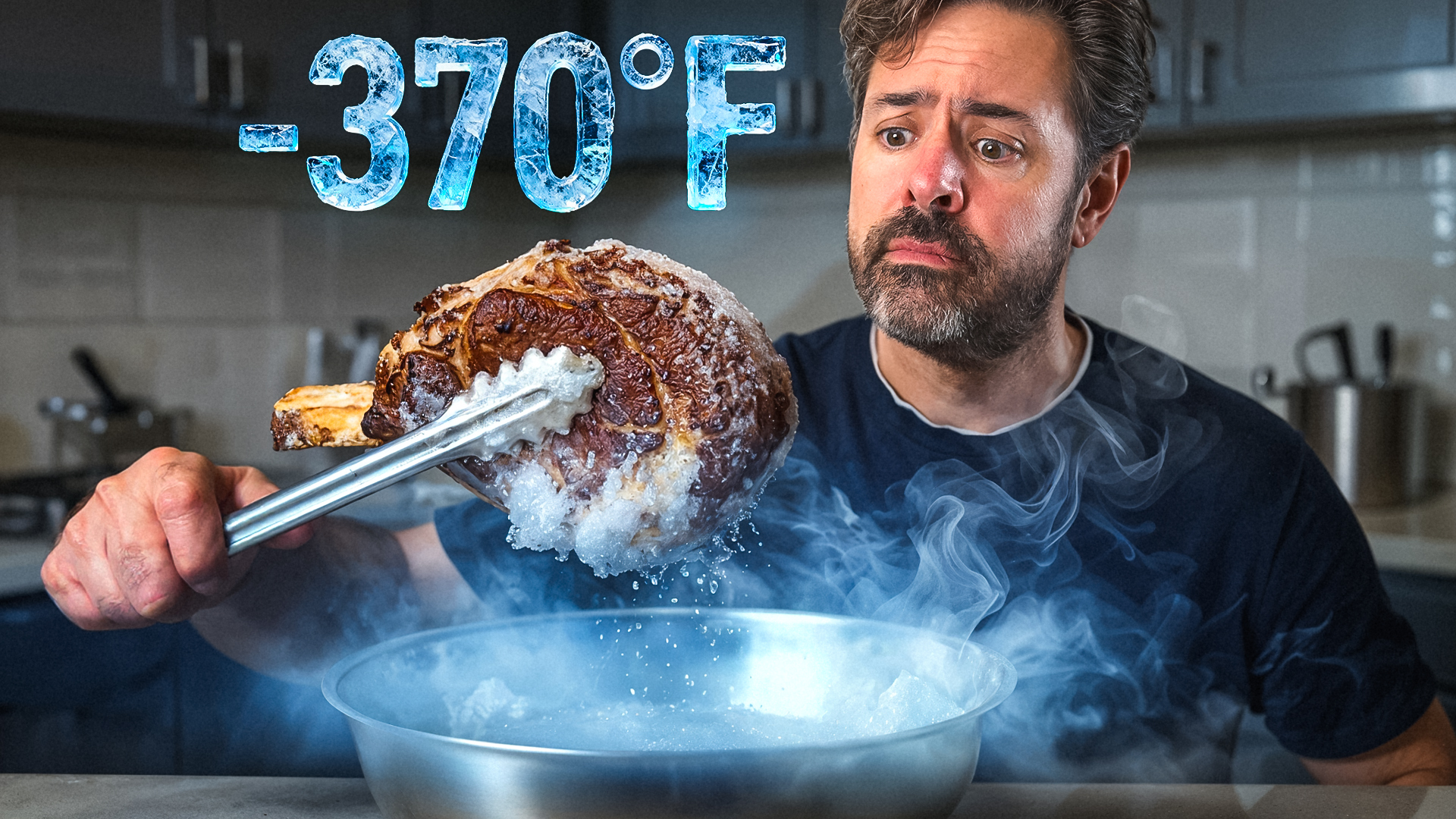
Ice water works as a coolant, but throw salt into ice like your great-grandmother churning homemade ice cream and the temperature plummets to 15°F. So I filled Mason jars with this icy salt brine, creating my own cold finger condensers.
I spent an entire afternoon swapping these jars in and out of my smoker, shaking them every few minutes to keep the glass cold enough. Every 10-15 minutes, I’d pull out the warmed jars and swap in fresh cold ones. The jars would sweat in the plume of smoke like an iced drink on a hot day, but those droplets were loaded with the forbidden flavorful molecules that bureaucrats have decided you shouldn’t have.
Then came the delicate work of carefully basting each jar with vodka to wash off that precious smoke film. All that work netted me a few tablespoons of concentrate, enough to make exactly one rack of ribs. But damn were they good ribs!
The smoke flavor had layers that developed as you chewed, not the clean, one-dimensional taste of store-bought liquid smoke, but something complex that hit like walking into a smokehouse. All those aromatic compounds that commercial processing strips away were back, giving my ribs a flavor that could go head-to-head with real pit barbecue.
This was it. The difference between good and great ribs, collected drop by precious drop. After a dozen failed attempts, my smokerless smoked ribs were perfect.
There was just one small problem—they required a smoker.
I needed smoke without fire. Washing smoke film off those jars made me think about what else was coated in smoke that I could wash. Smoked salt. Not the lightly flavored stuff, but the heavily smoked kind that’s jet black, crystals coated in smoke film that smell like a campfire. What if I could wash the smoke off those crystals instead? Was this even possible? And if so, how much salt would have to be washed to compete with real pit-smoke complexity? So naturally, I turned to math.
Running rough calculations on crystal surface area and film thickness, and multiplying it by an estimate of the phenolic content, my calculations suggested a pound or two would give me the phenolic boost I was chasing. But there was a catch: we don’t want pounds of salt in our ribs. This would need to be a surgical extraction. I needed the ideal solvent. What would Walter White do? He’d think like a chemist.
Wood smoke contains hundreds of different molecules. Some love water, some hate it. Some dissolve in alcohol, others need something in between. I started with vodka, figuring it had the right balance. Wrong. The water content was pulling in way too much salt along with the smoke film, and I was leaving behind aromatic molecules that preferred a stronger alcoholic wash.
I switched to 190-proof Everclear, which was better and left the salt untouched. But as I thought about the solubility of different smoke compounds, I realized nearly pure ethanol wasn’t optimal either; you actually need some water to efficiently pull certain compounds, but not so much that you run the risk of salt-curing your ribs.
The solution? 151-proof Everclear. Seventy-five percent ethanol, twenty-five percent water. That narrow sweet spot where you get broad-spectrum extraction. The ethanol dissolves fat-soluble aromatics and many phenolics, while the water helps pull polar compounds. Together they extract all the good stuff.
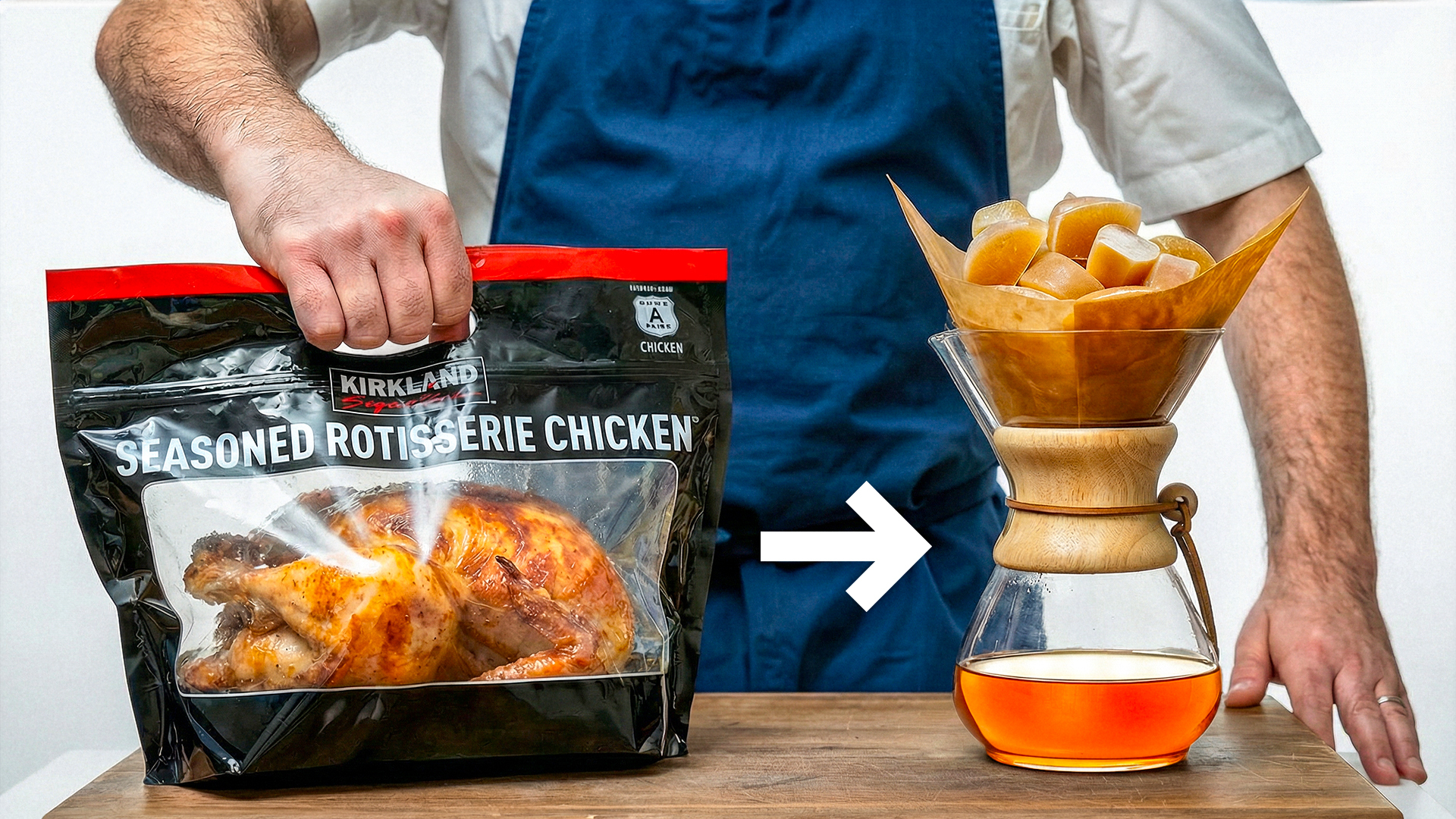
This had to be executed with precision, like a pour-over that would make James Hoffmann proud. Ice-cold alcohol, 3 minutes of gentle stirring, then immediate filtering. Move too slowly or let the temperature rise, and you dissolve too much salt. Work too fast, and you don’t extract enough smoke compounds. Like coffee, brewing smoke requires the timing to be just right.
Before it was ready to mix into my store-bought smoke, I needed to concentrate it with the patience of a saucier. Slow evaporation below a simmer avoids flashing off the desirable aromatics with the solvent.
What I ended up with was liquid vindication. A concentrated smoke that restored the complexity missing from the store-bought stuff. My culinary madness now made smokeless smoked ribs that were a remarkable forgery of the real deal.
But as I stood in my kitchen sometime well after midnight, surrounded by beakers, lab equipment, and bottles of high-proof alcohol scattered across the counters, I couldn’t help but think this looked more like I was cooking meth than cooking ribs. The whole setup of funnels and filters, thermometers and refractometers, the flammable solvents, the amber extracts in glass beakers. It was straight out of Breaking Bad.
Which gave me an unhinged idea. Why not a shot-for-shot remake of an iconic scene from that show? Turn the chemistry of barbecue into entertainment that would be impossible to forget.
When I scripted the scene and worked out the shot list, I ended up with 68 individual shots for about 6 minutes of video time. That’s a lot. Multiple locations, lots of wardrobes and props, stunts that required actual coordination. The kind of production that normally demands an army of professionals whose entire job is making sure everything looks good on camera and the talent is comfortable.
Breaking Bad had that army. Probably two dozen people, maybe more. An entire ecosystem of competence: assistant directors who actually know what they’re doing, script supervisors who remember which hand the actor used to pick up the jar, makeup artists who can make someone look beaten half to death without actually beating them half to death. Bryan Cranston probably had an assistant whose only job was to bring him cool drinks between takes.
I had three guys and a borrowed RV.
This should have been the moment I recognized I’d lost my mind. Instead, I doubled down.
The smart move, if any of this could be called smart, was starting with the interior RV scenes shot from the comfort of a driveway. The first shot should have been simple. I didn’t have the budget for actual actors, so I talked my videographer Canh into the role. The shot is straight-forward: Canh swaggers into the RV with a cigarette, and when I plead with him to put it out, he takes a slow drag, blows smoke in my face, and then flicks the cigarette out the window. All while looking like an appropriately menacing drug dealer.
Here’s the problem with that plan: Canh doesn’t smoke. And he doesn’t act. He’d take his drag, and then, without fail, break character before we got the shot. Hard to keep a straight face when you’re choking on smoke and I’m staring back at you in tighty-whities.
Cut. Reset. Another cigarette. Another ruined take.
By the time we got something that captured the tension of the original, Canh had chain-smoked his way through most of a pack of Marlboro Reds. He was nauseous, grumpy, and ready to retreat to the comfort of being behind the camera.
That was only half the scene. Desert exteriors meant finding something that could pass for New Mexico, which meant me driving a borrowed 35-year-old Winnebago across the state to Moses Coulee in a remote part of Eastern Washington. This is where any pretense of this idea being reasonable finally died.
What followed was a masterclass in middle-aged delusion. I’m running around in underwear and argyle socks, covered in baby oil, hurling handfuls of red sugar while pretending it’s a deadly phosphine explosion. Leaping from the RV door like I’m dodging gunfire that exists only in my increasingly heat-addled brain. Sprinting in desperate circles, stomping at invisible flames.
The thing about acting with elements that don’t exist is that you have to commit completely to the insanity, or you just look like someone having a very public breakdown in their underwear. I was betting everything on the magic of post-production special effects to transform my pathetic desert performance into something that resembled actual filmmaking.
You know that moment when you realize you’ve been performing your private madness for strangers? Yeah, that moment.
Picture a middle-aged man in underwear and Oxfords, glistening with sweat and baby oil in the desert heat. He’s kneeling next to his motionless friend, whose wrists and ankles are bound with duct tape. Two other men stand nearby, filming everything.
Now add a lone pickup truck wandering up the desolate road a hundred feet from our filming location.
The truck slows to that particular crawl reserved for highway accidents or witnessing someone’s life going spectacularly off the rails. The driver is clearly trying to process what he thinks he’s seeing. From his perspective, none of the available explanations are good.
He looked at us. We looked back at him. Everyone just stared. The driver was clearly trying to decide whether to stop and help, call the police, or just keep driving. He made the sensible decision to just keep going.
We weren’t done tempting fate. We had to finish the reckless escape that pays off the scene and takes my story to Texas, which required taking the ancient Winnebago off-roading. Other people would have reconsidered. Other people would have said, “You know what? Maybe we don’t need the wide shots of the RV careening on dirt roads. Maybe viewers can use their imagination.”
I am not those people.
The off-roading meant miles from any help, bouncing a 35-year-old vehicle over rocks and ruts that could snap an axle, puncture a fuel line, or strand us in the kind of desolate nowhere that makes people write their own obituaries. Every bump was a gamble. Every mile deeper into the desert was another mile we’d have to somehow get back.
But the shots looked great. Which, in the moment, felt like justification enough for risking everything on terrain that would challenge a proper off-road vehicle, let alone our borrowed meth lab on wheels.
I didn’t realize I might have done some damage until hours later, nursing that Winnebago over Snoqualmie Pass in the dark. The fuel gauge was dropping with the relentless certainty of a bad decision finally presenting its bill. Each mile, a little more gone from a cracked fuel line. Each stop at a gas station to top up, a growing certainty that whatever we’d sacrificed for those shots was about to strand me on a mountain highway, alone, smelling of gasoline and regret.
I limped the RV home after midnight, running on fumes and adrenaline. Five hours to pack, sleep, and catch a flight to Austin, where I’d be cooking ribs for a couple of Texas’s most respected pitmasters.
Was this ambitious filmmaking, or just an elaborate cry for help disguised as a YouTube video? Five weeks earlier, I thought I was making a simple rib video. A recipe for oven-cooked ribs that wouldn’t leave you eating disappointment, wishing they were the real thing. But somewhere in my middle-aged delusions of grandeur, I convinced myself I could reinvent centuries of tradition. That’s how Walter White becomes Heisenberg, but in my case it ended with me washing smoke from salt crystals, half-naked in the desert heat. All to make something worthy of a place like LeRoy and Lewis in Austin, Texas.
Texas Monthly’s number two in the state. A Michelin star. The kind of accolades that should have made me reconsider my entire premise. The people who line up for hours aren’t waiting for average. And what they get for that patience is something extraordinary: beef cheeks, confit and smoked that ruin you for lesser meats. Brisket that makes you understand why people drive across states for barbecue. And a miso-glazed and smoked carrot that could turn a meathead vegan… almost.
My first bite of the barbecue that Evan LeRoy and his pitmasters like Joe Yim cook should have been my reality check. The audacity of thinking this could be matched with kitchen hacks and chemistry.
But here we are. I was about to commit an act of profound hubris.
So I broke my self-imposed rule of no special equipment and pulled out my smoking gun. I smoked some fat-rich pork stock as it swirled in the blender for fast absorption of high-quality smoke. Five minutes was enough to make it smell like a proper barbecue pit.
I replaced the cider vinegar spritz in my recipe with this emulsified smoked pork stock to deliver raw, clean smoke, locked in a naturally sweet mixture of protein and fat. The proteins from the stock keep the surface loaded with reactive compounds. The fat helps carry some of the fat-soluble phenolics deeper into the drying bark, while a final hit of raw wood smoke would complete my forgery.
I hoped.
Then, a knock at the door announced my reckoning had arrived.
Evan LeRoy and Joe Yim stepped into my Austin Airbnb carrying the quiet confidence of people who know barbecue and the weary patience of professionals who’ve dealt with people like me before.
But when I pulled my ribs from the oven, Joe’s reaction was immediate. “Those look like they came straight out of a smoker.”
But looking right and tasting right are entirely different things.
Time to slice. I’ve cut thousands of pieces of meat over the years, but every stroke was nerve-wracking under their watchful eyes. As my knife cut through the first rib, I could see the perfect pink smoke ring just beneath the surface. Evan nodded approvingly at both my technique and the result.
“I like that you slice bone side up,” he said.
“Why’s that?”
“People get weird about slicing meat side up, like it’s some competition thing. But bone side up? The lines are right there for you. Texas ribs are tough. You’re not going to damage some delicate glaze.”
They each picked up a rib and gave it a smell. The smell test. First checkpoint.
“Smells good,” Joe offered. Promising, but hardly a victory.
Then the moment everything had been building toward. They bit down. The sounds of careful chewing filled the small apartment kitchen. This was it. The moment that would validate or destroy months of obsessive work.
Evan spoke first. “That’s a good rib.”
Joe nodded, still working his way through his bite. “Really good. The seasoning carries all the way through.”
Evan examined what remained of his piece. “Everything comes together,” he said, agreeing with Joe’s assessment.
Then came his own verdict. “Good cook. Good flavor. The bark is really good. It has an old school texture with the chew of properly barked up meat.”
The skepticism was dissolving into genuine approval. As I explained my recipe, Joe shook his head and laughed. “I feel loved.” Evan’s expression suggested he’d witnessed something between impressive dedication and mild insanity. “That’s a lot further than I’d ever go for a rack of ribs.”
Relief flooded through me. My obsession had produced smokerless ribs that impressed two of Texas’s most respected pitmasters.
We spent a few more minutes talking barbecue, me nerding out about the chemistry of smoke with a couple of guys who appreciated, or at least entertained, my insanity. But the endless cycle that working pitmasters face called them back to LeRoy & Lewis for another busy afternoon service.
As I closed the door behind them, I pulled out my phone. There was one more person I wanted to try my ribs.
“Josh, it’s Chris.”
“Yeah, I’m in Austin. Want to try some ribs?”
Thirty minutes later, I let myself into Josh Weissman’s studio, familiar with the layout from having filmed a video there a few weeks earlier for his YouTube channel. I made my way to the main filming area where I found him wrapping up a take for his upcoming video about one hundred things to do with fruit.
“Cut!” he called out. “How the fuck did you get in? Oh, wait, we don’t have security,” he said jokingly as I walked onto his set.
Josh off camera—unfiltered with no advertisers to appease.
I set my package of ribs onto his cutting board. “I love it when men bring me unidentified packages of meat,” he said, eyeing the bundle. When he opened it and saw the ribs: “These look legit.”
“I love that you’ve got the pink butcher paper for authenticity,” he said, examining the grease stains as he pushed the paper aside. He scooped up the rack of ribs and they sagged dramatically under their own weight, the meat wanting to stick to the paper. “Woah, these are floppy! I’m scared I’m going to tear them.” He brought them closer to his face and inhaled. “Nice and smokey!”
I pulled out my cleaver, an unnecessary dramatic flourish for the benefit of the cameras. A slicing knife would have been smarter. My cleaver came crashing down into bone instead of finding the gap between ribs, forcing my editor to jump cut through the scene later.
Josh grabbed a rib and said: “This looks great.” I pointed out the smoke ring running just beneath the bark. Josh looked at the rib closer and exclaimed:
“Wait, what? How is that even possible?”
One bite and his whole demeanor changed. “These are really good.” Still chewing, he said to no one in particular and everyone at once: “I’m not just saying this, but these are better than what most people would make with a smoker.”
He set down the rib and stared at me. “Alright. So how? What’s the move?”
I walked him through it: the nitrite spray for the smoke ring, the strategic applications of liquid smoke timed to protein denaturing phases, the alcohol extraction of smoked salt to boost complexity, the final hit of smoking gun-infused pork stock. Josh nodded along, processing each step.
Seeking validation from internet personalities is ridiculous, but if you’re going to do it, Josh was the right choice. Ten million subscribers don’t happen by accident; he had an uncanny ability to judge what would work for mainstream cooks. And as a Texan, he knew what good barbecue actually tasted like.
“That’s… a lot,” he said, then paused, reflecting. “But also, somehow, not a lot compared to making ribs in a smoker.”
He was right. The basic recipe was easier than traditional barbecue. The convection oven made temperature control trivial and cut hours off the cook time. Store-bought liquid smoke worked just fine. The recipe could be as simple or as elaborate as you wanted.
“How long did it take you to figure all this out?” he asked.
I thought about the mountain of ruined ribs, the weeks of testing, the process of discovering how to extract that missing bit of pit-smoked flavor by alcohol washing smoked salt and smoking pork stock. “Figuring out the techniques came pretty easily. But the video was a long journey.” I pulled out my iPhone. “Here, watch this.”
I showed him a rough cut of the Breaking Bad sequence. Sixty seconds of me channeling Walter White while explaining smoke chemistry, complete with the desert escape.
As he watched, Josh just shook his head slowly. He turned to the camera and said:
“You’re gonna want to watch this video.”
He turned back to me. “No one. Absolutely no one makes videos like this. You’re crazy Chris. But that’s why we love you.”
Standing there in Josh’s studio, I felt like I had democratized barbecue. An absurd amount of effort for what was ultimately a recipe, but it worked. Anyone with an oven could now make ribs this good. No smoker, no years of practice, no internet gatekeeping. The recipe was done. Now came weeks of work to turn this recipe and our footage into something that wasn’t just another YouTube ribs video.
As we headed to the airport in our rental car, I turned to my shooters Brian and Canh.
“The next video will be easy, guys,” I lied.